The ranch
A small ranch south of Kamloops, selling what it raises.
We are a cow-calf outfit, which means the cows live here year round and have a calf every spring. Most ranches our size sell the calves in the fall. We keep a few back, finish them ourselves, and sell the beef to people who live nearby.
Sample concept. Birchwood Ridge Beef is a placeholder, not a real business. The ranch described here is an example written to show how a farm shop can present itself.
Since 1979
Two generations, one brand.
The place was bought in 1979 as a hay farm with a handful of cows. The hay is still the backbone: two cuts off the valley bottom most years, and in a good year enough to sell some. The herd grew slowly, the way herds do when you keep your own heifers, and settled at around 120 cows some time in the 2000s. That is about what the land can carry without buying feed.
Selling beef directly started as a favour. A neighbour wanted a half, then two friends wanted quarters, and by the third year the phone list was long enough that we built the walk-in freezer. The online shop is the phone list with a cart.
Day to day it is two of us, one part-time hand through calving and haying, and a border collie who thinks she runs the whole thing.
The herd and the land
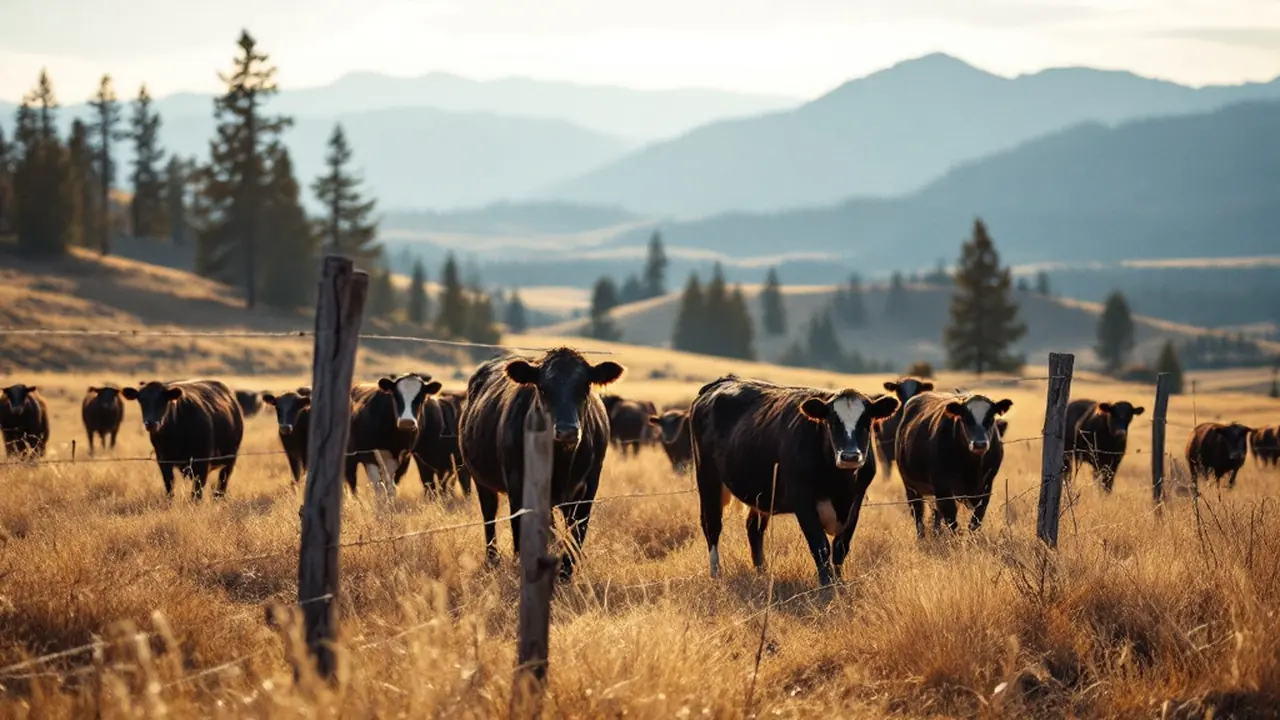
Angus and Hereford cows on dry grass, hay all winter.
- Herd
- About 120 cows, Black Angus and Hereford cross, with Angus bulls. Calves are born on the ranch from February to April.
- Range
- Bunchgrass and sage benches above the house, with pine and fir higher up. The cattle go up in May and come down in October.
- Hay
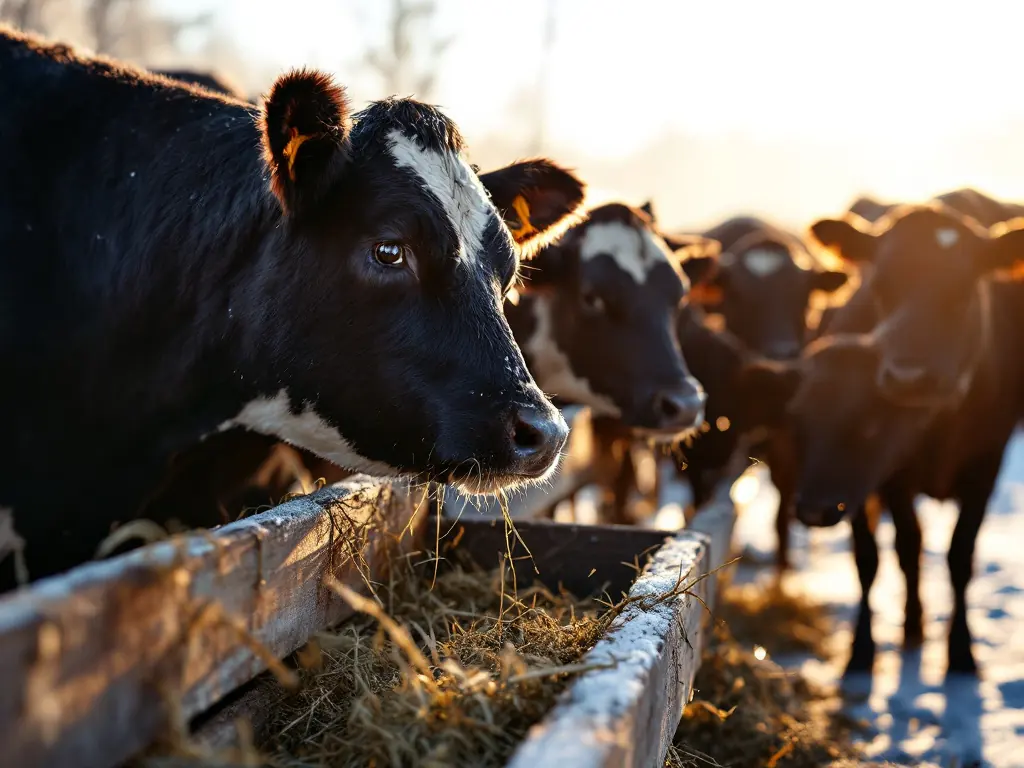
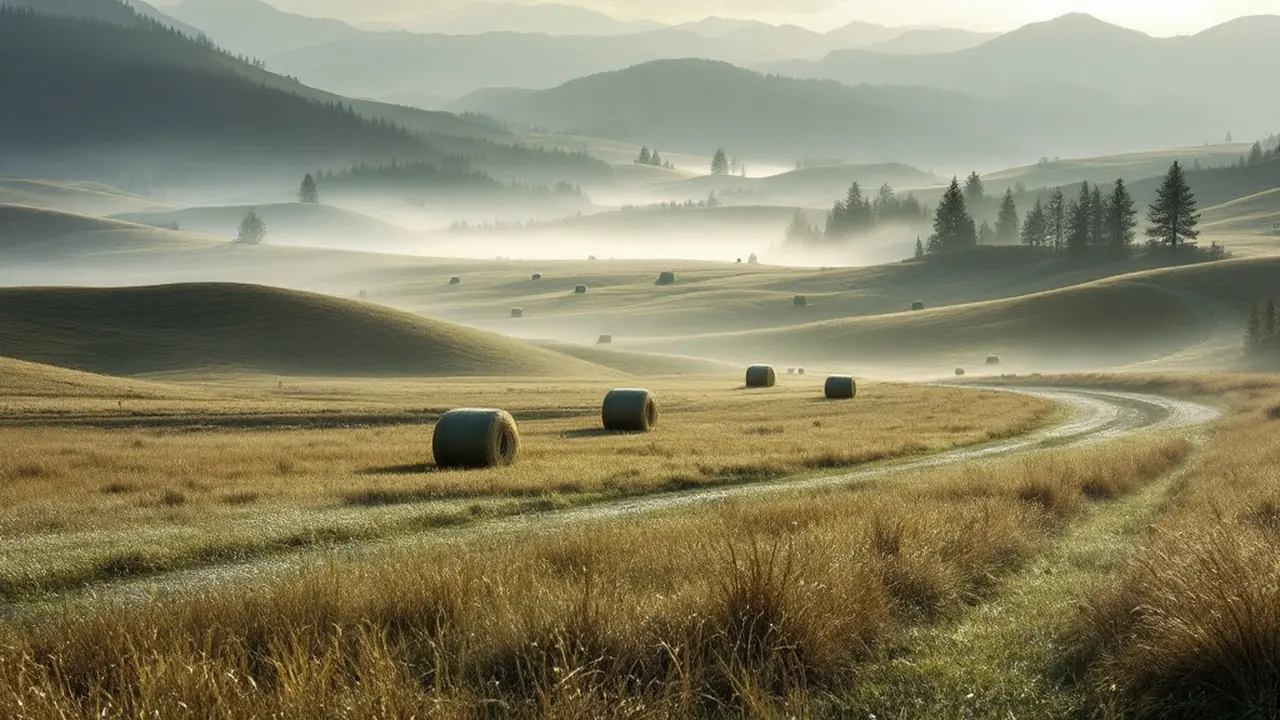
- Grass and alfalfa off the valley bottom, two cuts, put up as round bales. We feed from November to April.
- Water
- Creek and dugouts on the range, a well at the yard.
How the beef animals are raised
Every animal we sell was born here. Calves stay on their mothers through the summer on the range and are weaned in October. The ones we keep for beef winter with the herd on hay, go back out to grass the next summer, and come in to the home place for the last few months.
They finish on our own hay, with a little barley in the last stretch so the beef is marbled rather than lean and tough. We do not use growth implants. If an animal needs treating for something it gets treated, and it is sold through the regular market rather than through this shop.
Animals go to the butcher at 20 to 24 months. The butcher is a provincially inspected shop in the Kamloops area; the sides hang 14 days before cutting.
The year
What happens when, and why beef comes in lots.
We send animals to the butcher in two main windows, so the shop restocks in the fall and again in the spring.
- Feb to Apr
Calving
Night checks every two hours for eight weeks. The border collie stays in the truck.
- May
Turnout
Pairs go up to the range once the grass is ahead of them. Fence fixing starts.
- Jun to Aug
Haying
First cut late June, second cut in August if the weather holds. Everything we feed all winter.
- Sep to Oct
Gather and wean
Cattle come down off the hill. Calves are weaned, beef animals sorted off for finishing.
- Oct to Nov
Fall lot to the butcher
The main processing window. Boxes ordered through the summer are ready from late October.
- Dec to Jan
Feeding
Hay out every morning. The shop sells from the walk-in until the spring lot in March.